
Term vs. Whole Life Insurance: Which One Do You Actually Need?
- Compass Health Consultants®

- Aug 8
- 4 min read
Updated: Aug 9
Term life insurance and whole life insurance are both valid products — they just serve different purposes. Term life is temporary, affordable coverage designed to protect against financial loss during the years you need it most. Whole life is permanent coverage that also builds cash value, designed for lifelong needs. For most working adults, term life is the right starting point. For specific estate planning, business, or permanent income replacement needs, whole life has its place.
What Is Term Life Insurance?
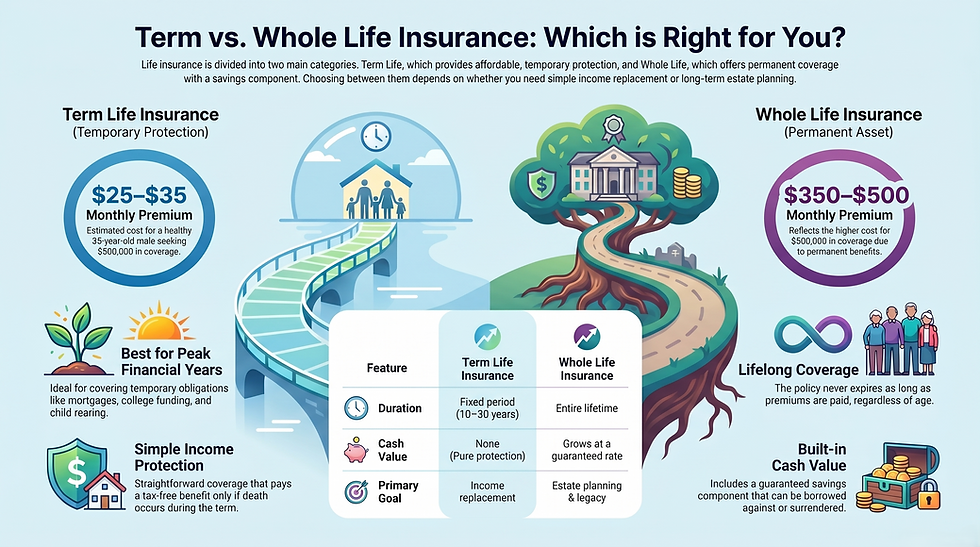
Term life insurance provides a death benefit for a specified period — typically 10, 15, 20, or 30 years. If you die during the term, your beneficiaries receive the death benefit tax-free. If you outlive the term, the policy expires with no payout. Premiums are fixed for the duration of the term and are significantly lower than whole life for the same death benefit amount.
Term life is the most straightforward, cost-efficient form of life insurance. A healthy 35-year-old male can purchase a $500,000, 20-year term policy for approximately $25–$35 per month. The same $500,000 in whole life coverage would typically cost $350–$500 per month.
Connect with an Expert on Life Insurance
Our Agency has been helping people like you for 30 years
What Is Whole Life Insurance?
Whole life insurance provides permanent coverage; it does not expire as long as premiums are paid. It also builds a cash value component that grows at a guaranteed rate and can be borrowed against or surrendered. Premiums are guaranteed to remain level for life. Whole life is more expensive than term, but the cost is spread over a lifetime, the policy includes a savings component, and the death benefit is guaranteed regardless of when you die.
Term vs. Whole Life: Direct Comparison
Term Life Insurance
Significantly lower premiums for the same death benefit
• Simple, straightforward — pure income protection
• Best for temporary needs: mortgage payoff, income replacement, child-rearing years
• Easy to understand and compare across carriers
• Can buy more coverage for less money
Whole Life Insurance
• Coverage lasts your entire life — never expires
• Builds cash value at a guaranteed rate
• Premiums never increase
• Can be used for estate planning and wealth transfer
• Accessible cash value for emergencies or retirement income
Who Should Buy Term Life Insurance?
Term life is the right choice for most adults who need income replacement during their working years, want to cover a specific financial obligation (mortgage, college funding), or are looking for maximum coverage per dollar of premium. A common recommendation: buy term coverage equal to 10–12 times your annual income for a term that covers your peak financial obligation years.
Who Should Buy Whole Life Insurance?
Whole life makes the most sense for people with permanent insurance needs: funding a buy-sell agreement, providing for a lifelong dependent (such as a special needs child), estate planning to cover estate taxes or leave a guaranteed legacy, or as a complement to maxed-out retirement accounts for high earners. Whole life is not ideal as a primary retirement savings vehicle for most people — the returns on cash value are generally lower than other investment options.
Can You Have Both?
Yes, and many people do. A common strategy is laddering: buy a large term policy to cover your working years and peak obligations, and add a smaller whole life policy for permanent needs (final expenses, estate planning). This gives you maximum coverage during the years you need it most, at a manageable total cost, while ensuring permanent protection for your specific permanent goals.
Frequently Asked Questions
Q: What happens at the end of a term life policy?
The policy expires. Most term policies include a conversion option that allows you to convert to a permanent policy without new medical underwriting — this can be valuable if your health has changed.
Q: Is whole life insurance a good investment?
Whole life should not be compared to market investments. The cash value grows at a guaranteed but modest rate and is best viewed as a conservative, guaranteed savings component with life insurance attached — not a growth investment.
Q: What does it mean when a term policy is convertible?
A convertible term policy allows you to switch to a permanent whole life policy at a future date without proving insurability. This is a valuable feature if your health declines during the term.
Q: Is there a best age to buy life insurance?
Younger and healthier applicants get lower rates. The best time to buy is when you have a financial dependant or significant financial obligation — typically in your 20s, 30s, or 40s.
Key Takeaways
• Term life is best for temporary, income-replacement needs — affordable and straightforward.
• Whole life provides permanent coverage and cash value for lifelong or estate planning needs.
• For most working adults, term life delivers the most value per premium dollar.
• Whole life makes sense for specific permanent needs: estate planning, business insurance, special needs dependents.
• A licensed broker can model both options side-by-side based on your specific financial goals.
Sources & References
• LIMRA. U.S. Individual Life Insurance Sales Survey. limra.com
• Insurance Information Institute. Whole vs. Term Life Insurance. iii.org
• NAIC. Life Insurance Buyer's Guide. naic.org


Comments